Mammals
Badger
(meles meles)
Although I've not seen them, there is an active sett towards the
northwest of the wood. Or at least there was in 2002. I've not been
in that area much since, leaving them as undisturbed as possible.
Red Deer
(Cervus elaphus)
Sadly I've not seen them, but the local deer-stalker has seen them in
the wood, and they are regularly seen in the area.
Grey Squirrel
(sciurus carolinensis)
Widespread throughput the wood, they are regularly seen. The damage
they do by stripping the bark high up in the trees is also an
obvious sign of their presence.
 Wood Mouse
(apodemus sylvaticus)
Wood Mouse
(apodemus sylvaticus)
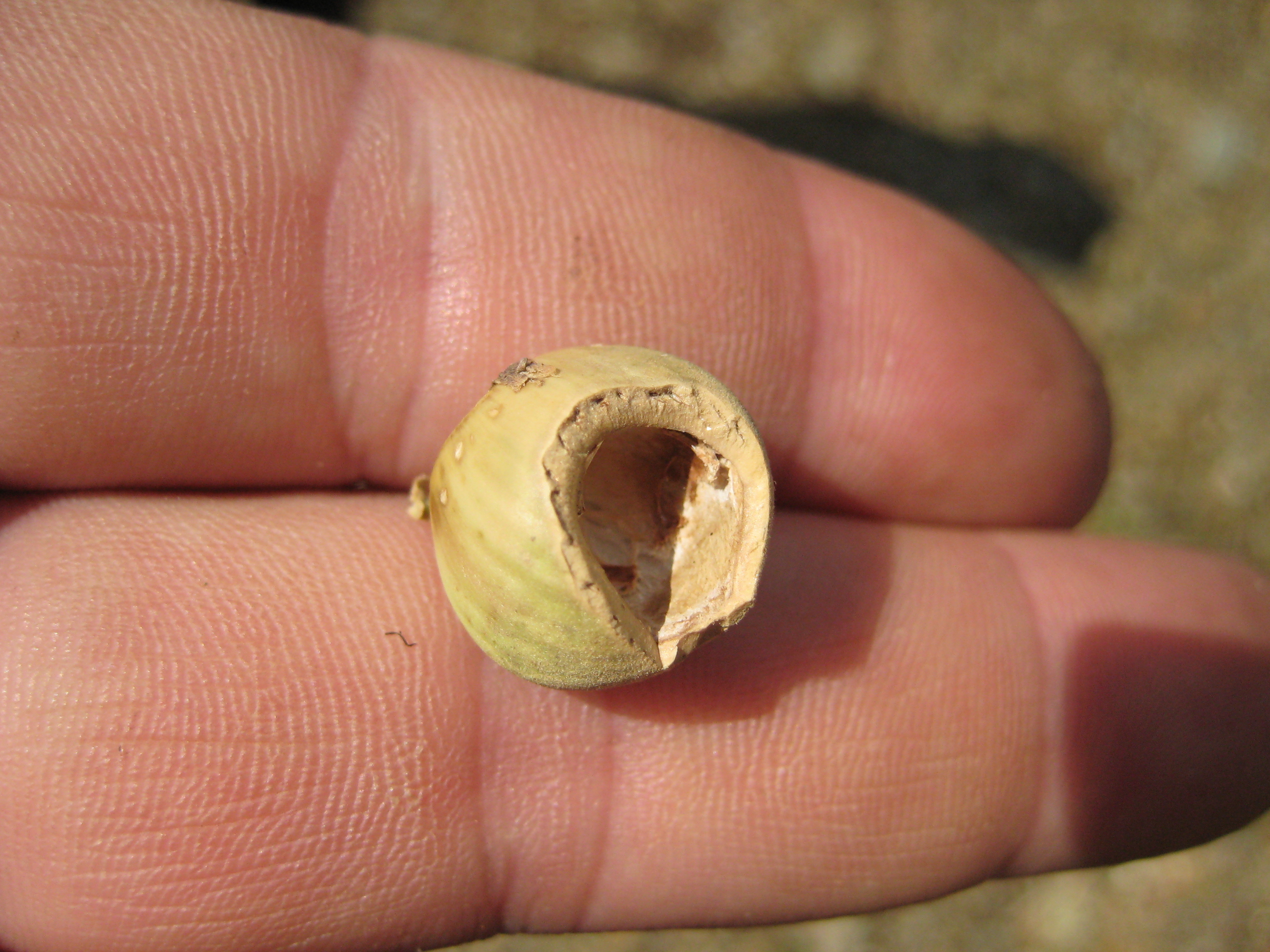
Only indirect evidence of these. We found a number of Hazelnuts that
had been nibbled by a rodent. Research indicates that the Wood Mouse
was the most likely candidate. The chewed Hazelnuts were found on the
bank across the track from Fernbank.
Pipistrelle Bat
(Pipistrellus pipistrellus)
Seen regularly during overnight stays, they feast on the insects
at The Hollies. Identification of the specific species is based on
circumstantial evidence, and the use of a bat detector.
Fox
(Vulpes vulpes)
Spotted trotting along the track at Fernbank by Nathanial. A classic
case of staying hidden and quiet, and waiting to see what passes by.
 Roe Deer
(Capreolus capreolus)
Roe Deer
(Capreolus capreolus)
I was lucky enough to see three of these all together at Fernbank.
Arriving one day on a daytrip I drove down the track and slowly round
the corner into Fernbank. As we rounded the corner a group of three
were stood in the middle of the track. There was a couple of seconds
while we all stood and looked at each other, before they moved off
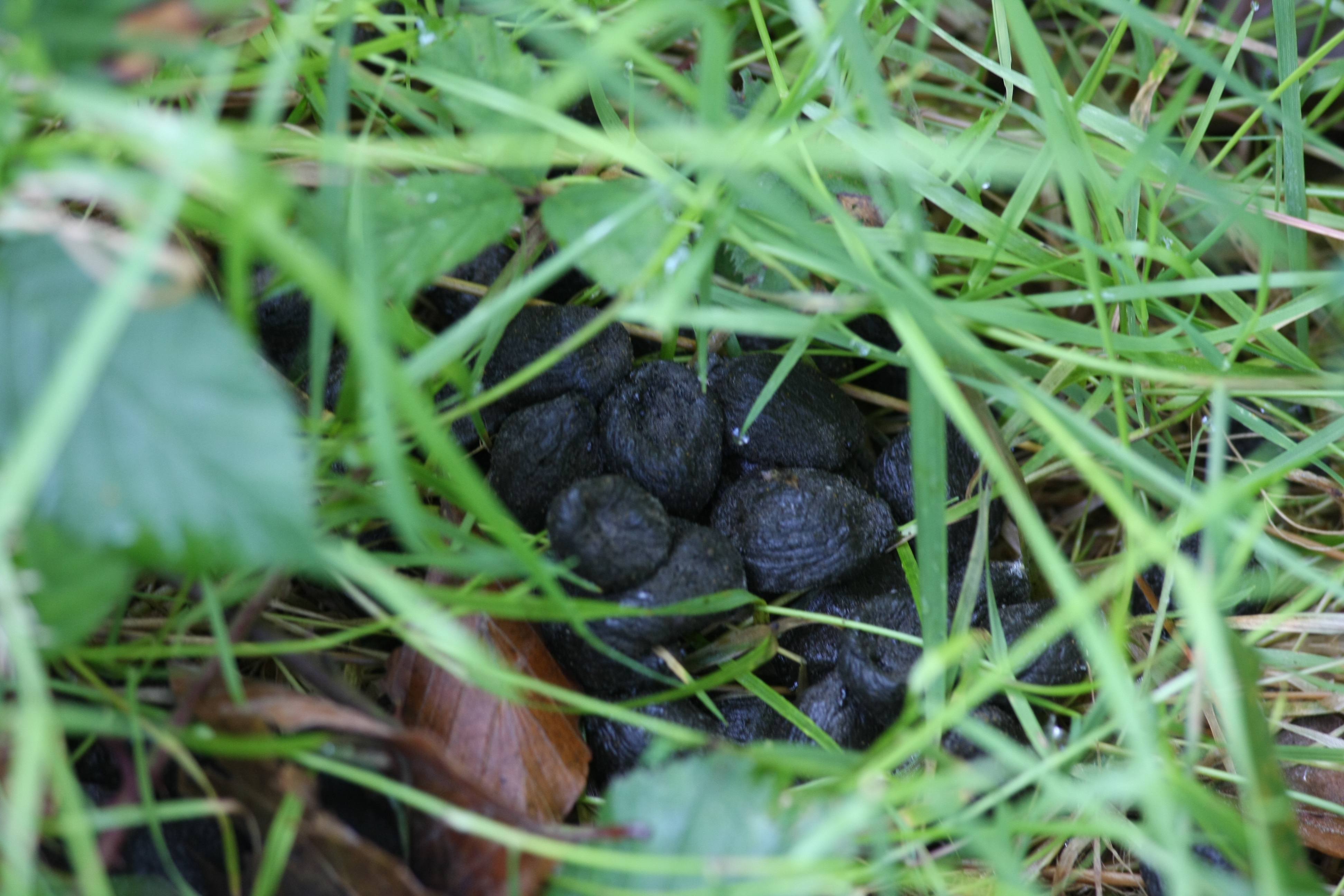
into the undergrowth. I have also found some of their droppings,
confirming the identification.
Birds
Wood Pigeon
(Columba palumbus)
With their distinctive "coo-coooo-coo" call they are easily identified
both in and around the wood.
Collared Dove
(Streptopelia decaocto)
Willow Warbler
(Phylloscopus trochilus)
Tawny Owl
(Strix aluco)
Late one evening we were sat round the fire enjoying a well-earned
beer when to the south we heard the "ke-wit" announcing call. A few
seconds later we heard the "koo-oooo" territorial call of a male to
the north. So we know that a least one pair is living in the area.
Raven
(Corvus corax)
The largest of the corvids (crow family) these are occasionally seen
flying over the wood. At this distance they are most easily identified
by there size, and here other birds give us a helping hand. Other
species mob them, and so we can compare sizes. Closer views allow them
to be identified by their diamond-shaped tail.
Chiff Chaff
(Phylloscopus collybita)
Rarely seen, but often heard as they call out their name "chiff-chaff
chiff chaff".
Crow
(Corvus corone)
A common site just about anywhere in England, they are generally
similar to the Raven, but much smaller and bolder. They are occasionally
seen quite close up as they search for carrion.
Magpie
(Pica pica)
Easily identified they are regularly seen in all parts of the wood.
Sometimes they just sit in trees observing the world, othertimes
they'll be busy flying around looking for a variety of foods.
Long-tailed Tit
(Aegithalos caudatus)
A group of five or six are occasionally seen in the wilder parts
of the wood, flitting in and around the thickets. Their size and
long tail make them easily identifiable once you are able to catch
a glimpse of them.
Great Tit
(Parus major)
A common site seen on most visits. Larger than a Blue Tit, and with
a black cap, they are normally busy collecting grubs and seeds.
Robin
(Erithacus rubecula)
The gardener's companion seems to be able to locate disturbed ground
within minutes of you starting work. Whenever any groundwork is
being undertaken they keep an eye out for any worms or grubs that
may be disturbed.
Jay
(Garrulus glandarius)
A stunning but for me at least, a very beautiful sight. One day on
arrival, driving from Lizard Corner round to Fernbank it flew across
in front of the car and landed in a tree. It then hopped forwards
in front of us several times before disappearing into the trees.
Goldfinch
(Carduelis carduelis)
A stunning little bird, and a sign of the benefits of a managed
woodland. Now that several rides and glades have been opened up, a
good crop of thistles are able to prosper. Several Goldfinches were
observed feeding on the thistle heads in The Hollies during late
summer.
 Great Spotted Woodpecker
(Dendrocopos major)
Great Spotted Woodpecker
(Dendrocopos major)
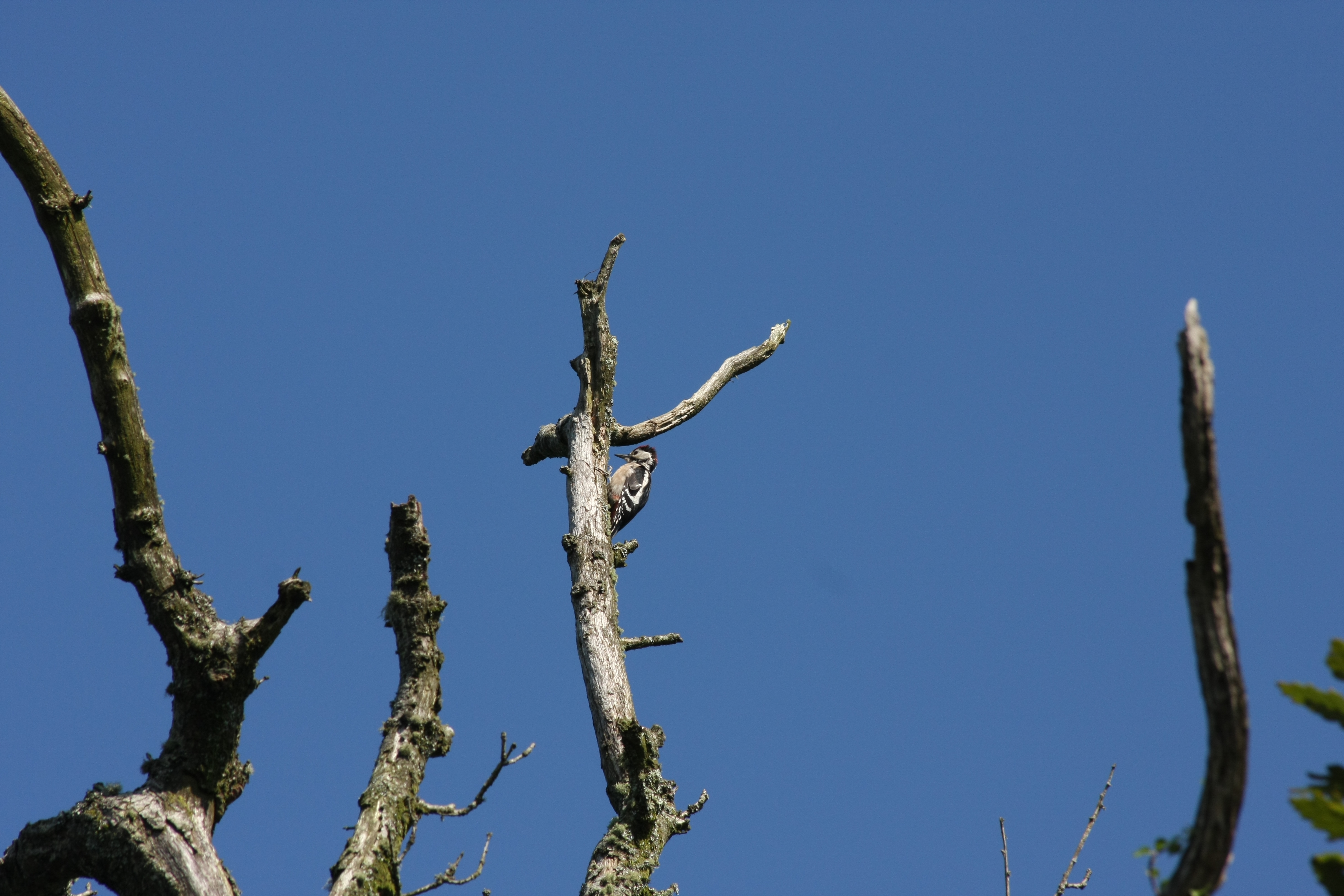
Heard many times before one was seen, it was first identified by its
looping flight. In then landed at the top of a dead oak tree overlooking
Fernbank, where it spent some time wathcing us, before flying off.
A clear example of management not being the same as total clearance,
and that dead and decaying plants are as significant a habitat as
new young growth.
Buzzard
(Buteo buteo)
Following recent changes in farming practices, and a greater awareness
of the natural world, this is now Britain's commonest bird of prey.
They are sometimes seen circuling high above the valley, but one day
I was treated to an extraordinary experience. Heading home one day I
was driving away from Fernbank when one landed in a tree just ahead of
the car. As I continued it hopped from tree to tree in front of me.
Eventually it took up position in a tree in the field opposite, and
watched as I drove away.
Nuthatch
(Sitta europaea)
Wren
(Troglodytes troglodytes)
One of Britain's smallest birds, but full of character. Careful study
will often find them flitting around in the brash.
Blackbird
(Turdus merula)
A common sight in gardens, they also provide a delightful dawn chorus
whenever I'm staying overnight.
Amphibians & Reptiles
 Common Lizard (adult & young)
(Lacerta vivipara)
Common Lizard (adult & young)
(Lacerta vivipara)
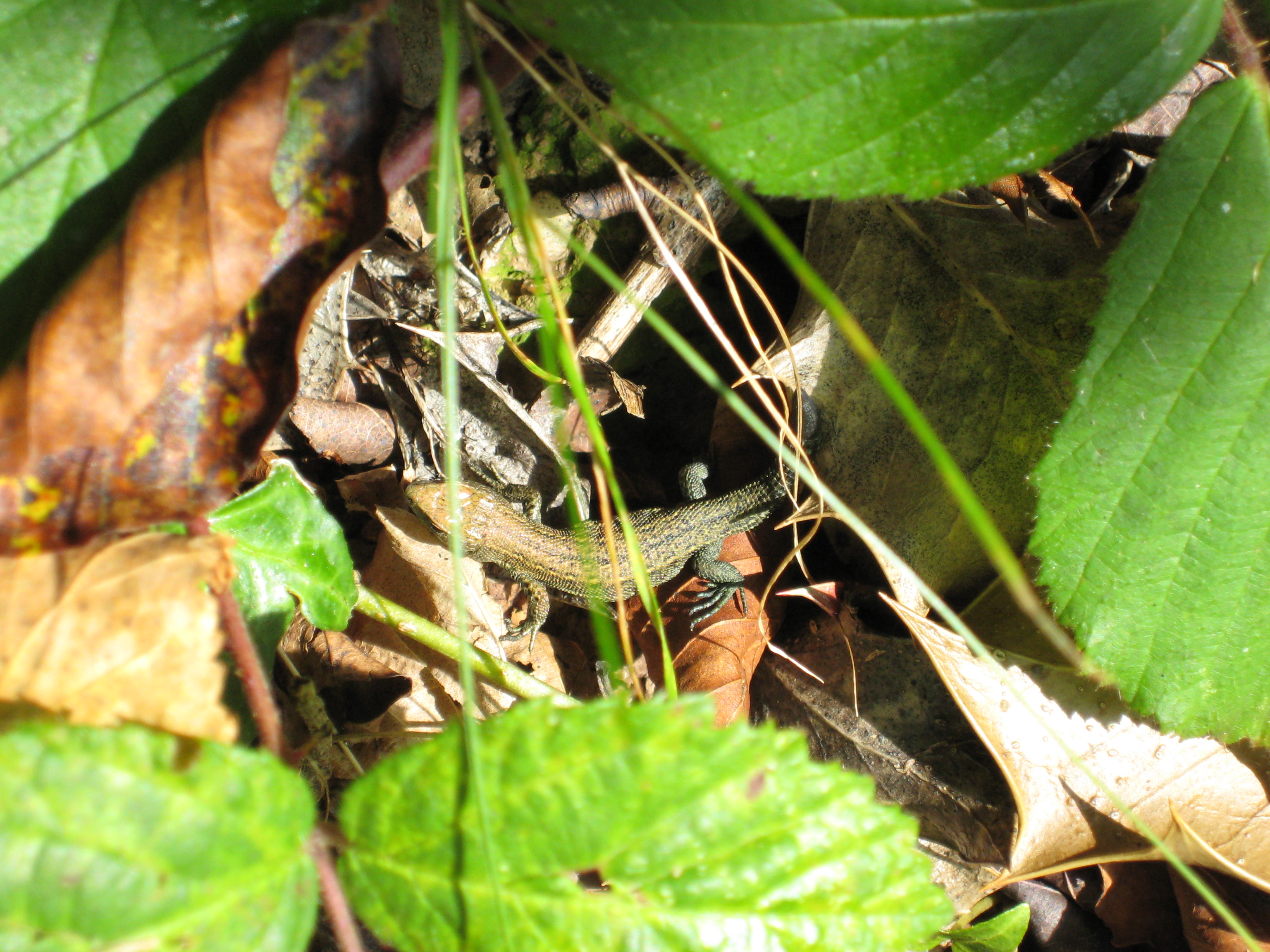
A real surprise, and all credit to Will and Nat for spotting them. On
the corner between the main drive and The Hollies a family were spotted
sunning themselves. By the time I'd got the camera the adult had
disappeared but the young were inquisitive enough to remain visible.
Common Toad
(Bufo bufo)
Another visitor to the campsite. Found lurking behind the tent walking
ariund in the long grass.
Butterflies & Moths
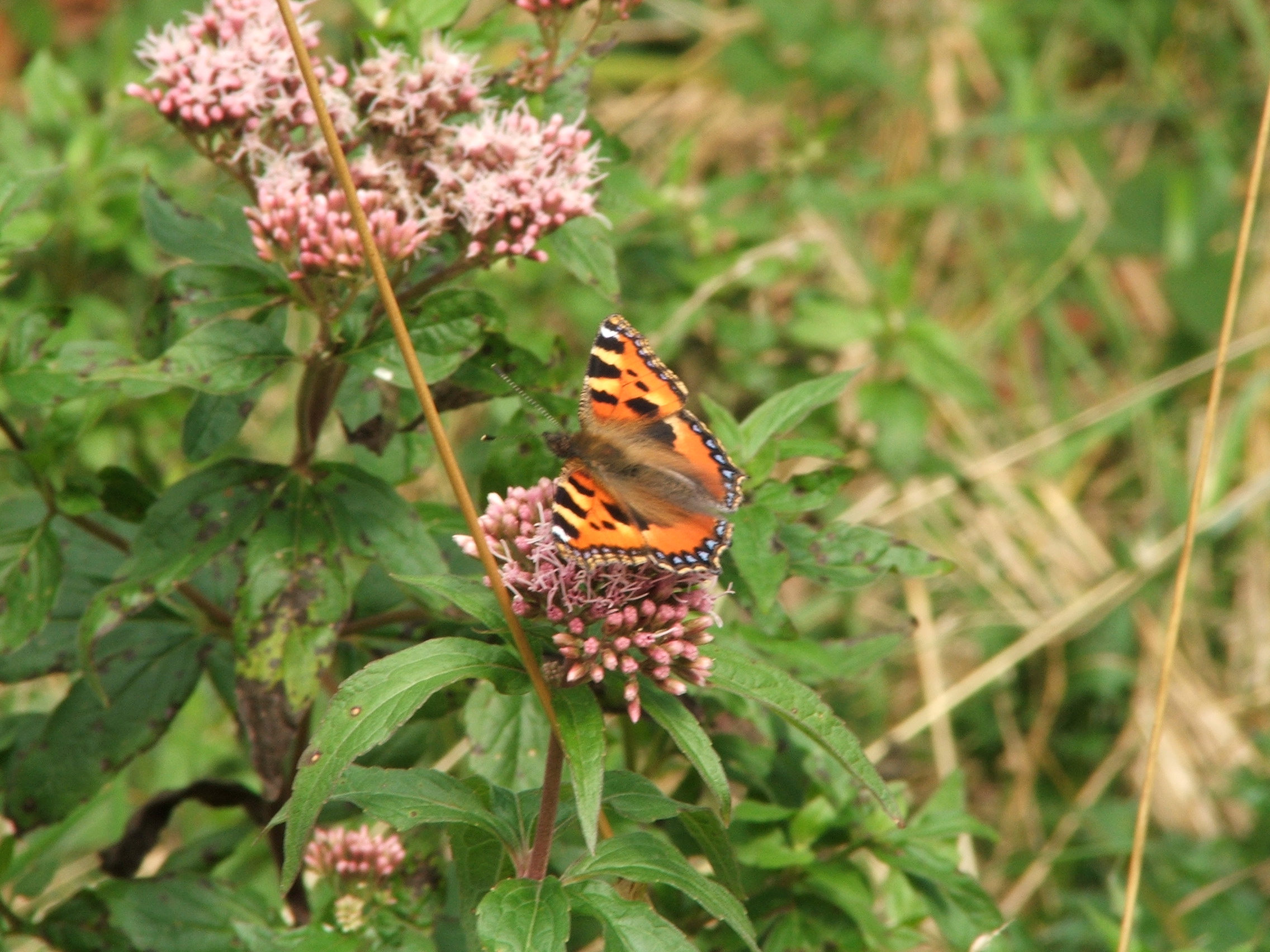 Small Tortoiseshell
(Aglais urticae)
Small Tortoiseshell
(Aglais urticae)
With it's eye-catching orange wings it is easily seen, but difficult
to study as they are so active. Now that the main drive has been
opened up and sunlight can reach the ground, various plants have
grown up that are providing food for a variety of insects, these
included.
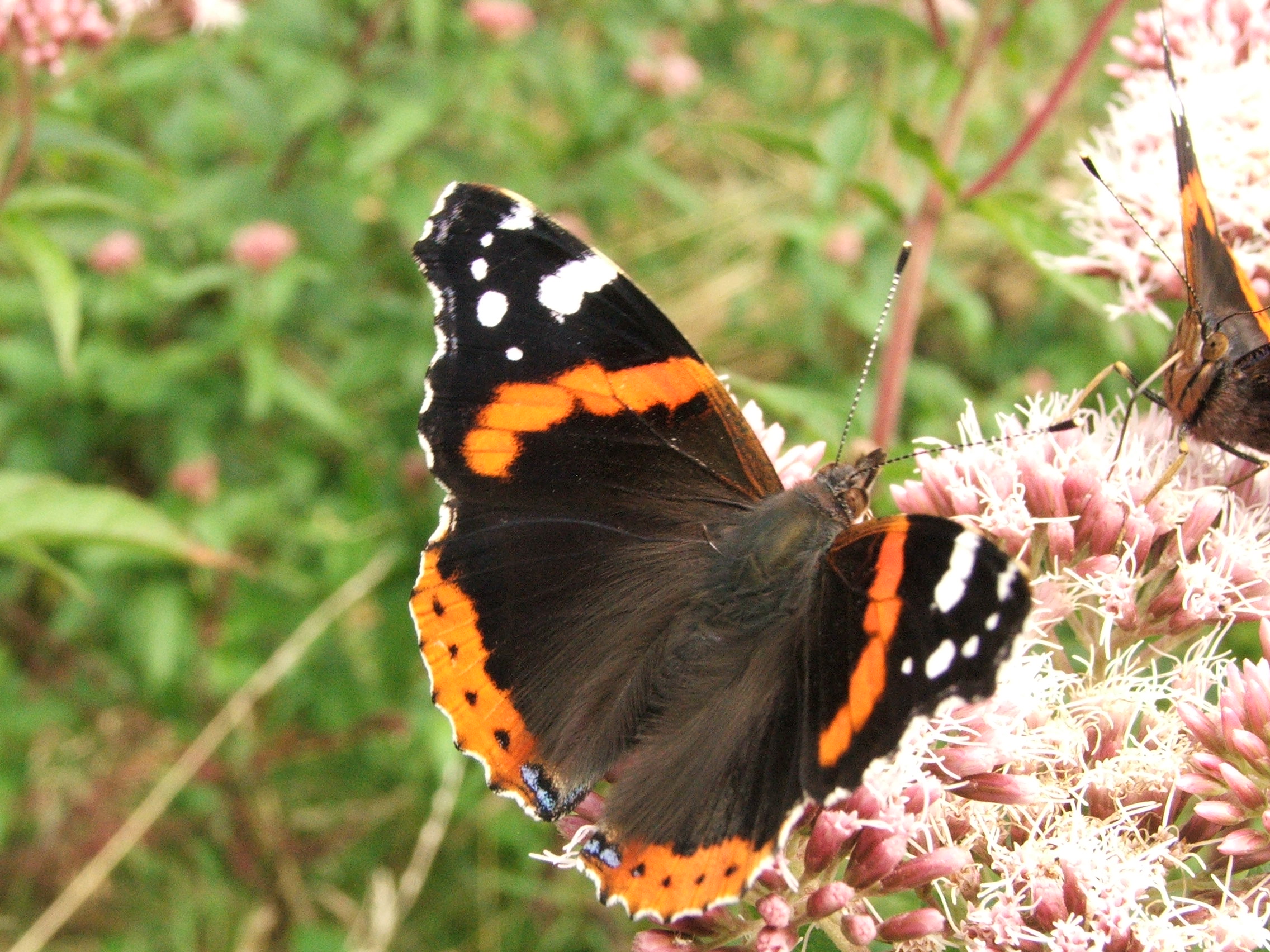 Red Admiral
(Vanessa atalanta)
Red Admiral
(Vanessa atalanta)
Easy to identify by it's black wings with a single large orange
circle encompassing both wings, these appear in the wood in their
dozens, feeding on the Hemp Agrimony.
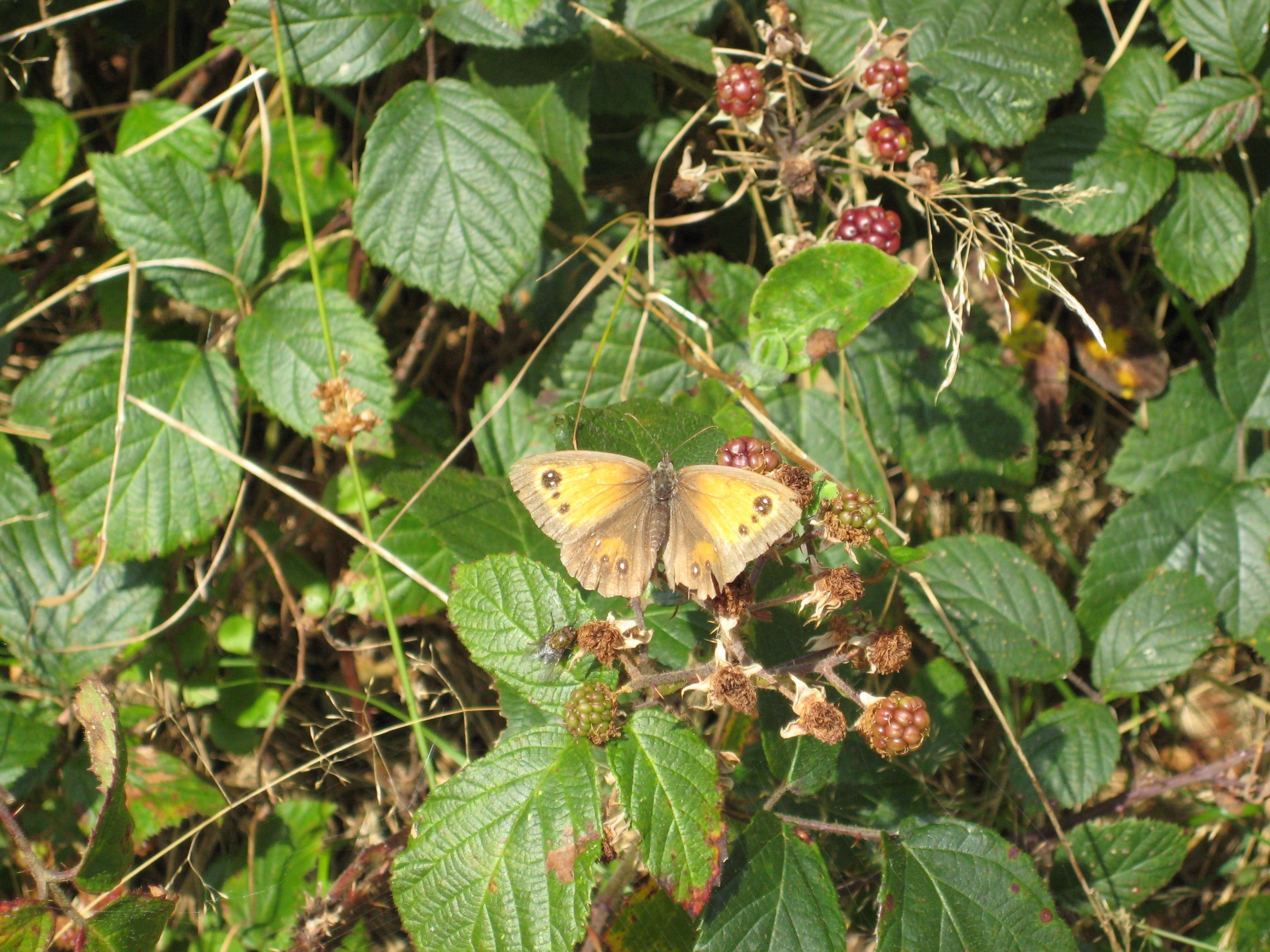 Hedge Brown / Gatekeeper ♀
(Pyronia tithonus)
Hedge Brown / Gatekeeper ♀
(Pyronia tithonus)
As their common name suggests they are normally found patrolling
hedges, and are often seen defending their territories from
neighbouring rivals. A gateway makes a natural division between
territories, and so they tend to congregate in these areas.
White Admiral
(Ladoga camilla)
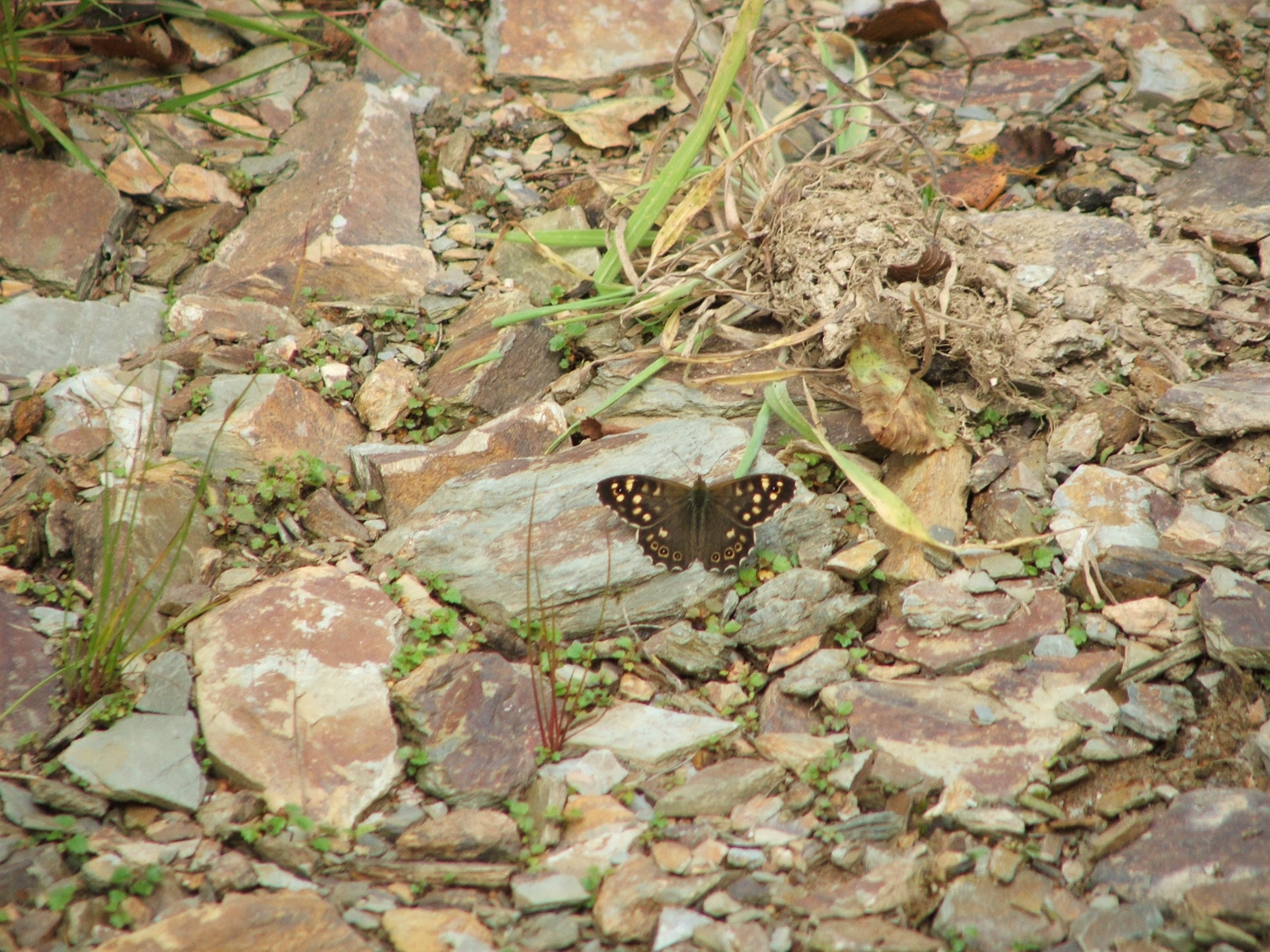 Speckled Wood
(Pararge aegeria)
Speckled Wood
(Pararge aegeria)
During summer days they are easy to spot as they bathe in the sun
along the main drive.
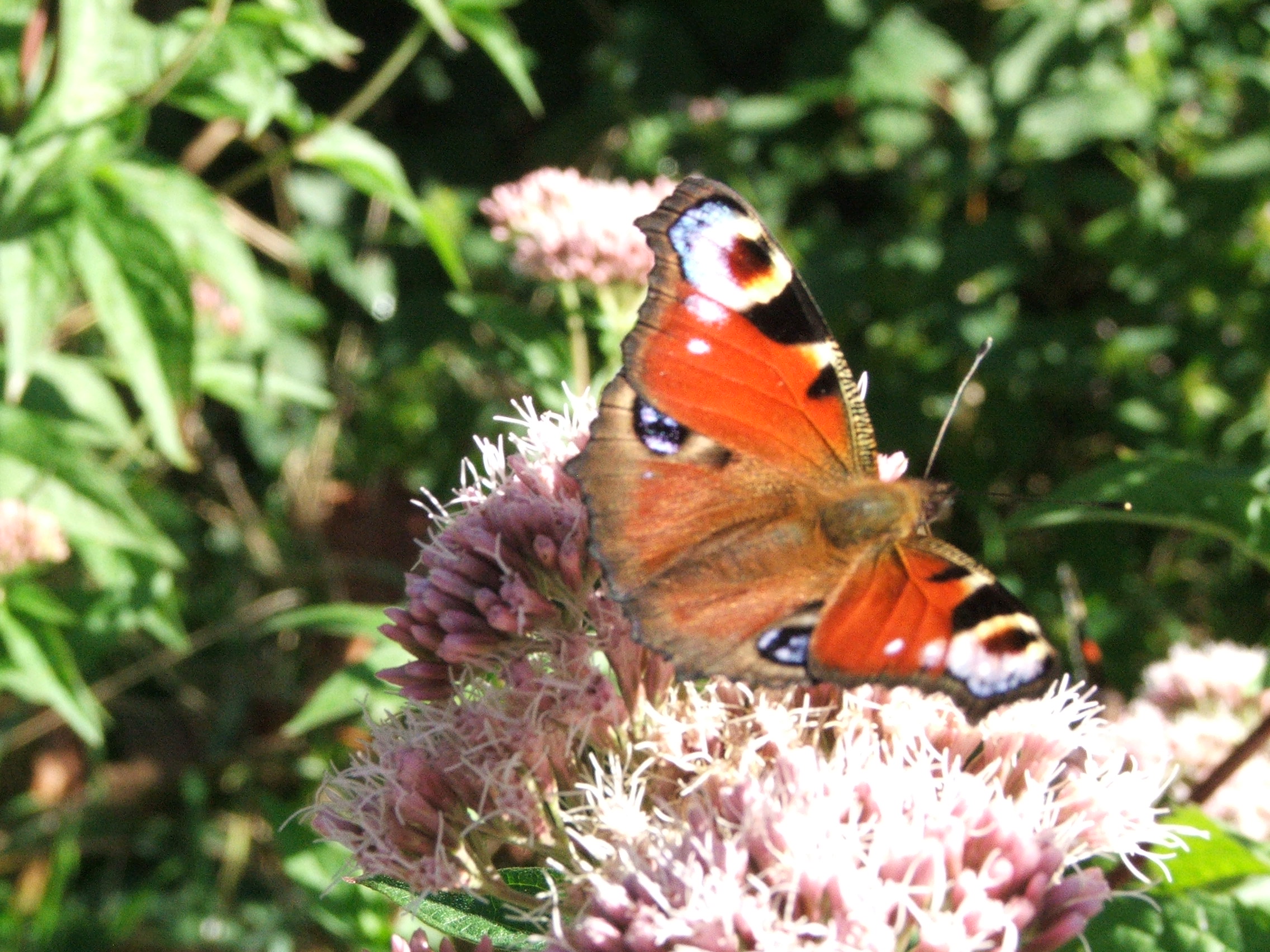 Peacock
(Inachis io)
Peacock
(Inachis io)
Arguably the most spectacular of all butterflies. Only ever seen in
small numbers, they take advantage of the nectar provided by the
Hemp Agrimony on main drive.
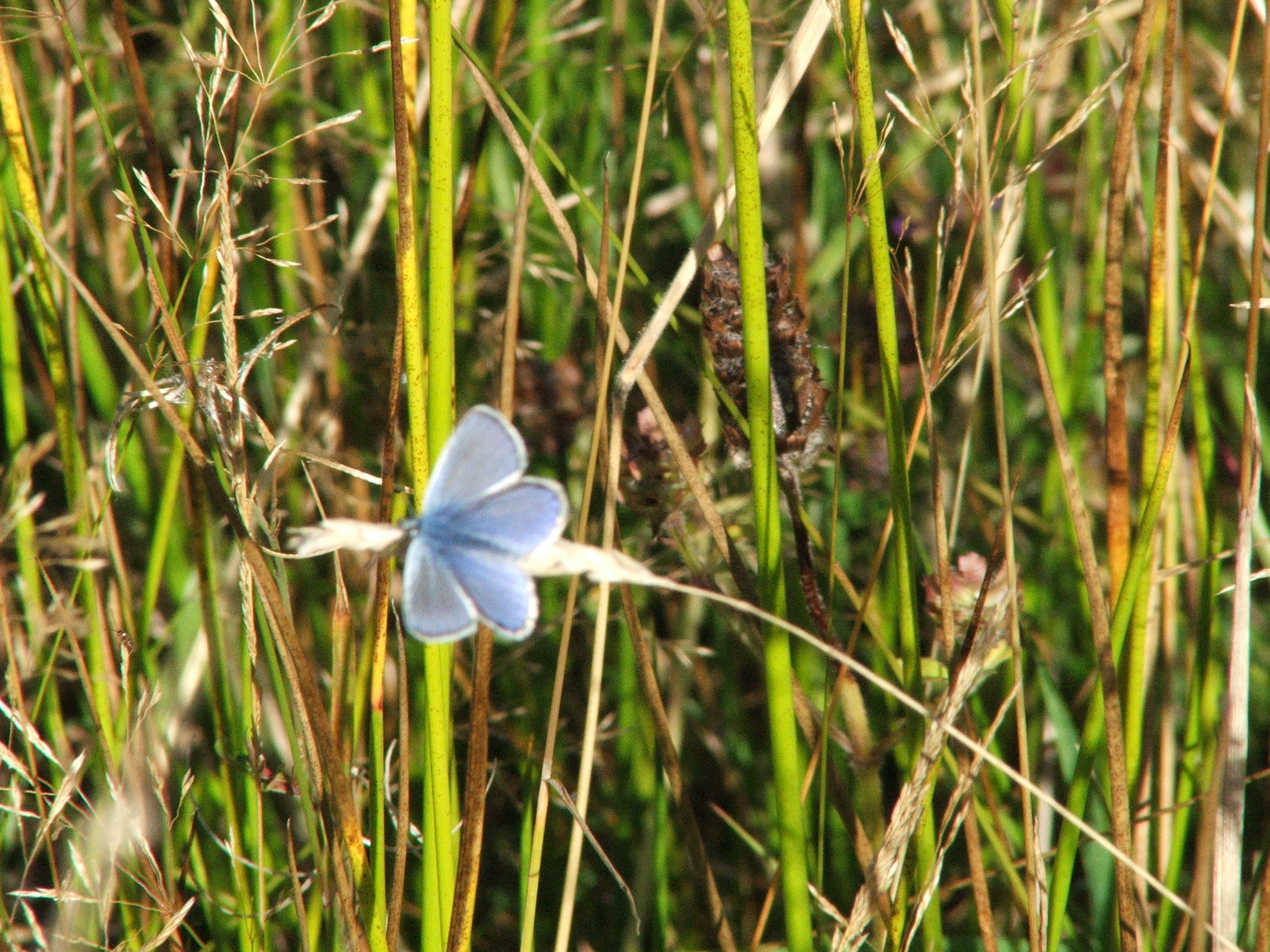 Common Blue ♂
(Polyommatus icarus)
Common Blue ♂
(Polyommatus icarus)
Small, nervous, and fast moving, this one took a while to positively
identify. Not often seen, but when they are they tend to be
patrolling the grassy area near the main gate.
Other Insects
Common Hawker dragonfly
(Aeshna juncea)
Only 99% sure of the identification here, as it wouldn't settle long
enough to get a good view. Patrolling the area around the main gate
it was obviously on the hunt for a good meal.
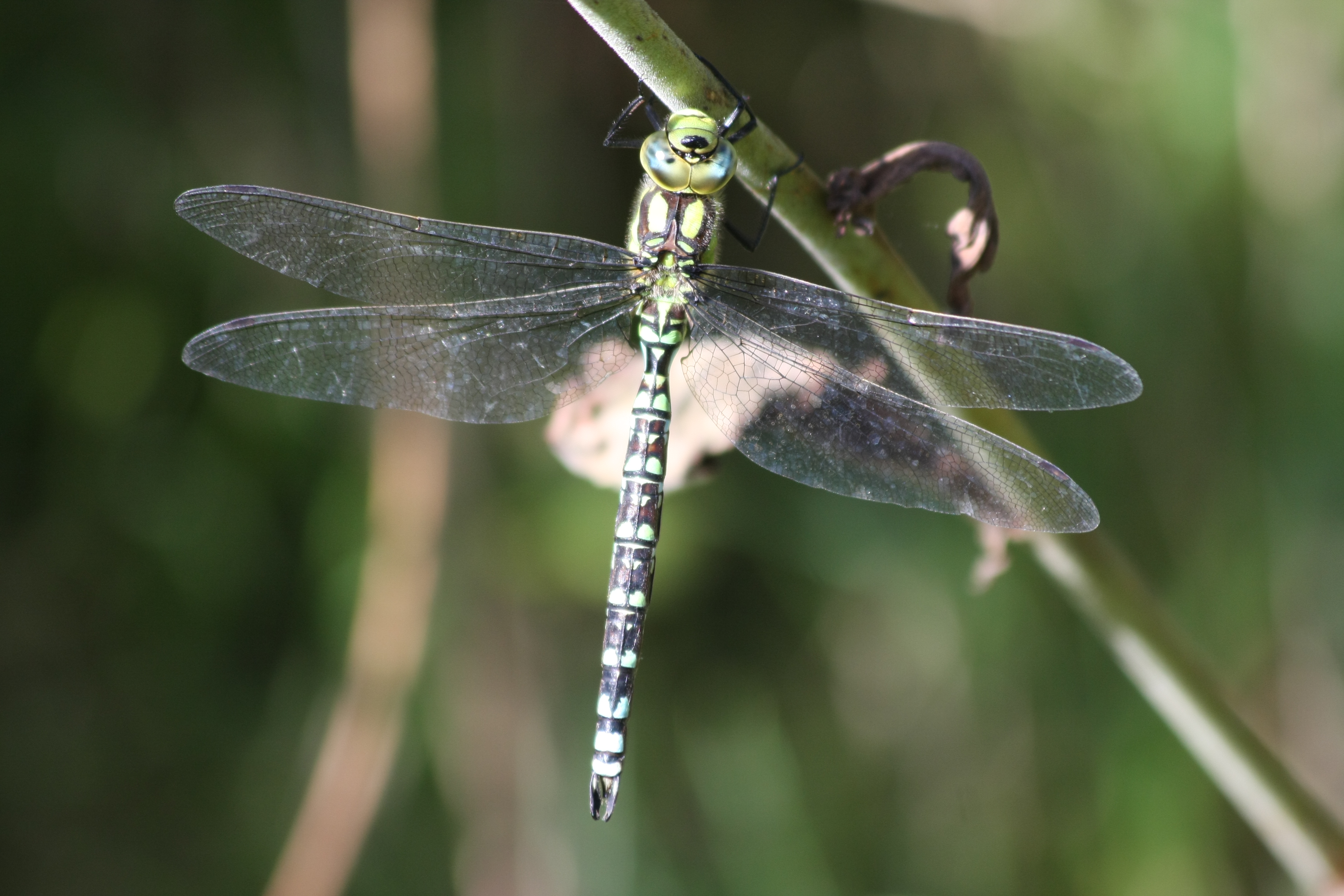 Southern Hawker dragonfly (immature) ♂
(Aeshna cyanea)
Southern Hawker dragonfly (immature) ♂
(Aeshna cyanea)
Spotted this one as it patrolled the main drive close to The Quarry.
Eventually it settled long enough for me to get a picture. Identified
not only by its general appearance, but by the joined-up yellow patches
on the end of its tail.
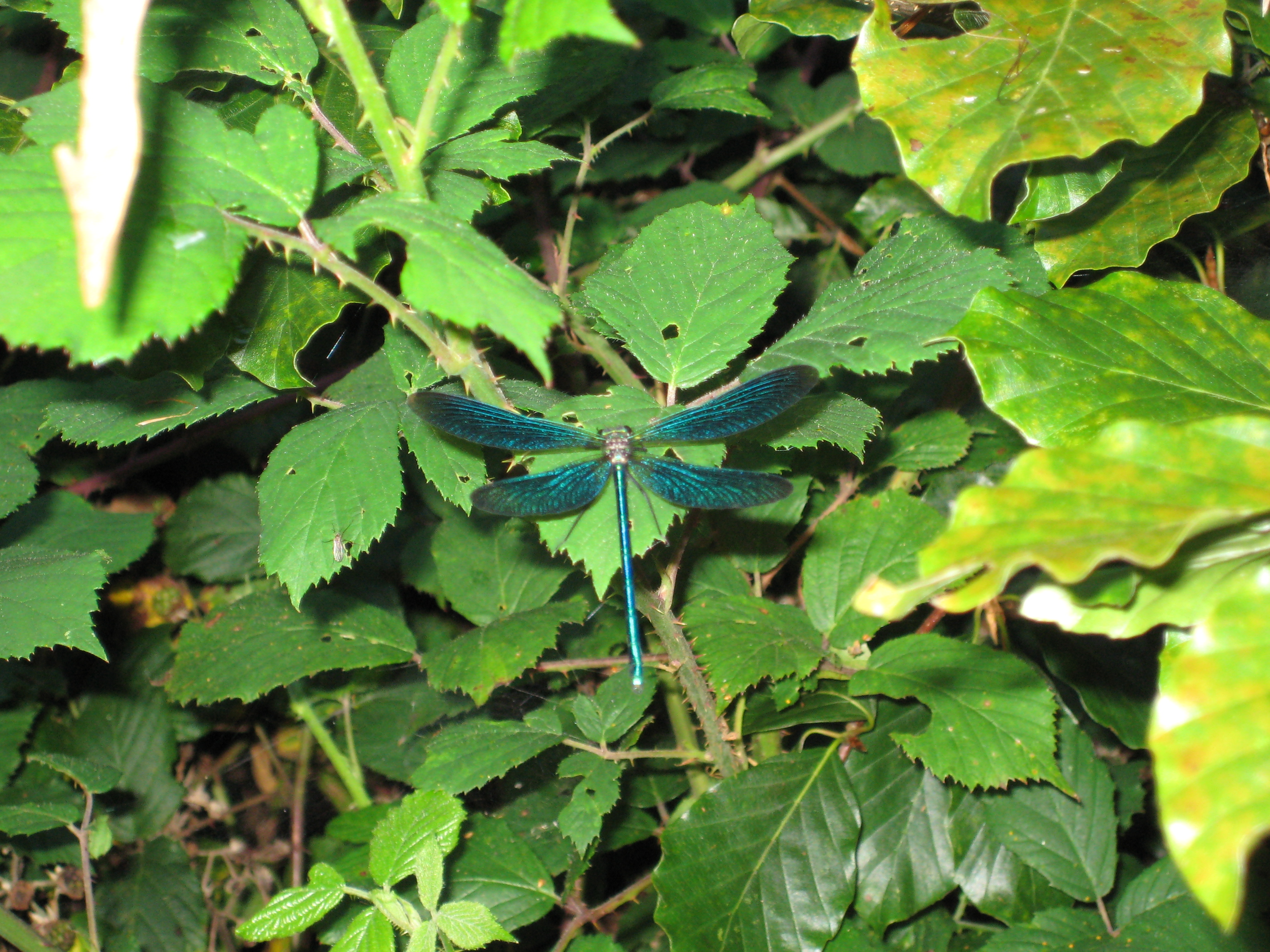 Beautiful Demoiselle damselfly ♂
(Calopteryx virgo)
Beautiful Demoiselle damselfly ♂
(Calopteryx virgo)
Living up to its name this damselfly appeared one evening in The
Hollies, and settled on a tree for the night. The light had faded too
far for me to get a picture. However the following morning it was still
there, and remained so until the sun warmed it up and it was able to
continue on its travels. As it was some way from any water, it may have
been in its Teneral stage of development.
Large Red damselfly
(Pyrrhosoma nymphula)
Didn't get a picture, but being bright red I'm reasonably confident
about the identification.
Cockchafer beetle
(Melolontha melolontha)
A lesson in always having a camera with you! Discovered on some
brambles on Main Drive I realised that my camera was back in the car.
I noted the antler-like horns and then went to get the camera. By
the time I got back it had gone.
Hoverfly
()
Very common, being seen on pretty much every flower that's out in the
sunshine. There are so many species that's it has been impossible to
identify them specifically.
Rhododendron Leafhopper
(Graphocephala fennah)
Discovered this little beastie taking refuge inside my tent. It looks
similar to a Shield Bug, but has reddish patches on its back.
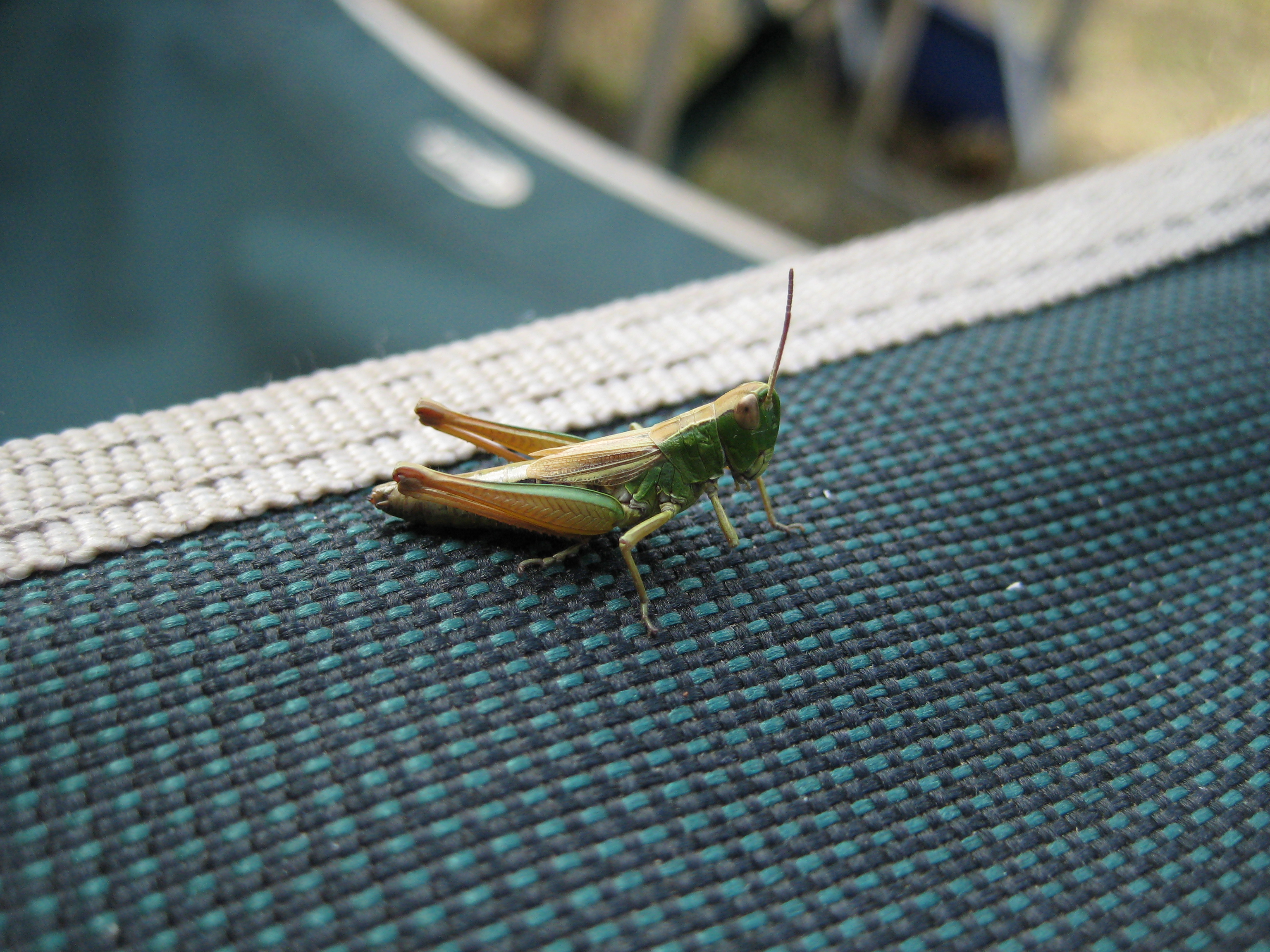 Striped-winged grasshopper
(Stenobothrus lineatus)
Striped-winged grasshopper
(Stenobothrus lineatus)
After hearing it for several hours, it eventually showed itself, and
became quite friendly. Happy to let us study it, it spent quite a
while relaxing on the picnic chair.
Sheep tick
(Ixodus ricinus)
Ben and Josh found these! Thanks to Barney for showing us the safe
way to remove them. They would have come from the deer that inhabit
the wood.